Why Cleaning Frequency Matters More Than Most Businesses Think
One of the most common questions businesses ask when evaluating office cleaning in El Paso is how often their office should actually be cleaned.
The answer depends largely on how a workspace is used. Some offices have steady employee traffic throughout the day, frequent visitors, and multiple shared areas. Others operate with quieter activity and fewer people moving through the space. The way an office functions directly affects how quickly areas like restrooms, breakrooms, trash stations, and shared surfaces accumulate use.
Many organizations begin with a cleaning schedule that simply feels reasonable at the time, often once per week or a few times per week. Over time that schedule becomes routine, even if the size of the team, office traffic, or use of shared spaces changes.
Cleaning frequency plays a direct role in how consistently a workplace is maintained. When service intervals are too long, small issues begin to accumulate between visits. Trash areas fill faster, restrooms lose their appearance sooner, and high-touch surfaces see more buildup during the workweek.
When the cleaning schedule aligns with how the office operates, cleanliness stays consistent instead of fluctuating between visits. For most businesses, determining the right schedule starts with understanding what factors actually influence how often an office should be cleaned.
The Main Factors That Determine Office Cleaning Frequency
There is no single cleaning schedule that fits every office. The appropriate frequency depends on several practical factors that influence how quickly a workspace accumulates daily use.
Understanding these factors helps businesses determine whether cleaning should occur daily, several times per week, or on a lighter schedule.
Employee count in the office
One of the most straightforward drivers of cleaning frequency is how many people work in the office. More employees generally mean more daily activity, higher restroom usage, fuller trash containers, and more shared surfaces being touched throughout the day.
Larger teams usually require more frequent service simply because the space experiences consistent use.
Daily traffic and visitors
Some offices receive regular foot traffic from clients, vendors, or customers. Reception areas, conference rooms, and waiting areas tend to see the most impact from outside visitors.
Offices with frequent guests often benefit from more consistent cleaning to maintain a professional appearance throughout the week.
Shared spaces within the office
Areas used by multiple employees tend to accumulate use faster than individual workstations. Breakrooms, conference rooms, copy areas, and shared workspaces typically require more regular attention than private offices.
These shared zones often become the deciding factor when determining cleaning frequency.
Restroom usage
Restrooms are one of the most heavily used areas in any workplace. The number of employees using them each day, combined with how often they are accessed, can significantly influence how often cleaning is required.
Offices with multiple restrooms or higher staff counts often require more frequent service to maintain hygiene and appearance.
Industry environment
Different types of offices operate in different ways. Professional offices, medical spaces, administrative centers, and corporate workplaces all experience different patterns of daily activity.
Some environments naturally generate more frequent use of shared areas and surfaces, which can require a higher cleaning frequency to keep the workplace consistently maintained.
These factors together usually determine how often an office should be cleaned. Once they are considered, most workplaces fall into a few common cleaning schedules used across commercial offices.
Office Cleaning Frequency for El Paso Businesses
Once the size of the workspace, employee activity, and shared areas are considered, most offices fall into a few common cleaning schedules. The goal is to maintain the workspace consistently throughout the workweek rather than allowing areas to decline between visits.
Most commercial offices operate on one of the following service frequencies.
Daily Office Cleaning
Daily cleaning is common in offices with larger teams, frequent visitors, or multiple shared areas that see continuous use during the day.
Service typically focuses on the parts of the workspace that experience the most daily activity, such as restrooms, trash stations, breakrooms, floors, and commonly touched surfaces. Daily attention to these areas helps maintain a consistent environment throughout the week.
Three to Five Times Per Week
Many offices operate on a schedule of several cleanings per week. This cadence is often appropriate for workplaces with steady employee activity but less overall traffic than larger offices.
Cleaning multiple times per week allows shared areas, restrooms, and common spaces to remain consistently maintained while balancing service frequency with the needs of the workplace.
Weekly Office Cleaning
Some offices operate with a weekly cleaning schedule when the space experiences lighter daily use. Workspaces with smaller teams, fewer shared areas, and limited visitor traffic may find that a weekly visit maintains the environment effectively.
Weekly service typically focuses on a full reset of the workspace, including trash removal, restroom cleaning, floor care, and surface cleaning. While frequency determines how often service occurs, it also helps define what office cleaning services typically include during each visit.
Why Inconsistent Cleaning Schedules Create Problems
A common issue in many workplaces is not the cleaning itself, but the lack of consistency in how often it occurs. When cleaning schedules fluctuate or service is too infrequent for the way the office operates, small problems begin to accumulate between visits.
Trash areas fill faster than expected, restrooms lose their appearance sooner, and shared spaces begin to show signs of daily wear. Over time, these small changes affect how the workplace looks and feels for employees and visitors.
Inconsistent schedules can also make it harder to maintain a steady standard of cleanliness. When too much time passes between visits, each cleaning becomes a larger reset instead of routine upkeep. This often leads to a cycle where areas look good immediately after service but gradually decline before the next visit.
Consistent cleaning intervals help prevent that pattern. When service frequency matches the way an office is used, common areas stay maintained, issues are addressed before they accumulate, and the workspace maintains a more stable appearance throughout the week.
For many businesses, determining the right schedule starts with evaluating how the workspace is actually used and matching cleaning frequency to those conditions.
Determining the Right Cleaning Plan for Your Office
Choosing the right cleaning frequency usually begins with a simple evaluation of how the workspace operates. Most professional cleaning providers determine the appropriate schedule by reviewing several practical aspects of the office environment.
One of the first considerations is the size of the workspace and the overall layout of the facility. Larger offices with multiple rooms, restrooms, and shared areas typically require more frequent attention to keep the environment consistently maintained.
Employee activity throughout the day is another important factor. Offices with larger teams or higher daily activity often generate more routine cleaning needs across restrooms, trash areas, and shared spaces.
Cleaning providers also look at the number of restrooms and breakrooms, as these areas tend to require the most regular attention in any workplace. Spaces that are used throughout the day naturally require more consistent maintenance.
Another consideration is the type of flooring and surfaces within the office. Carpeted areas, hard floors, and high-touch surfaces may require different levels of care depending on how frequently they are used.
By reviewing these elements together, a cleaning provider can recommend a service schedule that aligns with how the office actually operates. Businesses that are unsure about the appropriate schedule for their workspace often begin with an evaluation of their facility and cleaning needs. You can learn more about how this process works through our page on professional office cleaning in El Paso.
Final Thoughts on Office Cleaning Frequency
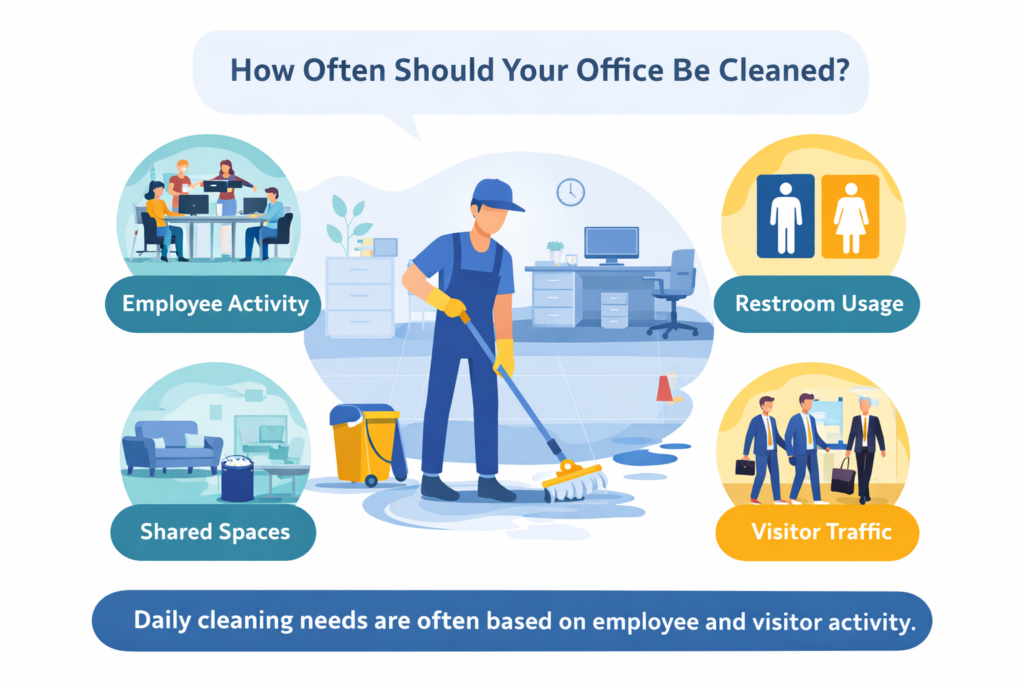
The right cleaning frequency depends on how an office operates day to day. Employee activity, shared spaces, restroom usage, and visitor traffic all influence how quickly a workspace accumulates routine use.
When cleaning schedules align with these factors, the workplace stays consistently maintained throughout the week. Restrooms remain presentable, trash areas stay under control, and shared spaces continue to reflect a professional environment for employees and visitors.
Many businesses begin with a schedule that seems reasonable and adjust it over time as the needs of the office become clearer. In some workplaces, a weekly visit may be sufficient. In others, several cleanings per week or daily service may be necessary to maintain a consistent standard.
Evaluating how the workspace is used and matching the cleaning schedule to those conditions helps ensure the office environment remains steady rather than fluctuating between visits.